SpaceVision asks what changes for a regular person if AI data centers move to space.
Oleh Lahoda built it after Starcloud’s paper on data centers in orbit. The mission is computers above Earth, cooled by space itself. He wanted the part a normal question would actually feel.
01 — The desk
1:32 a.m. in a dorm
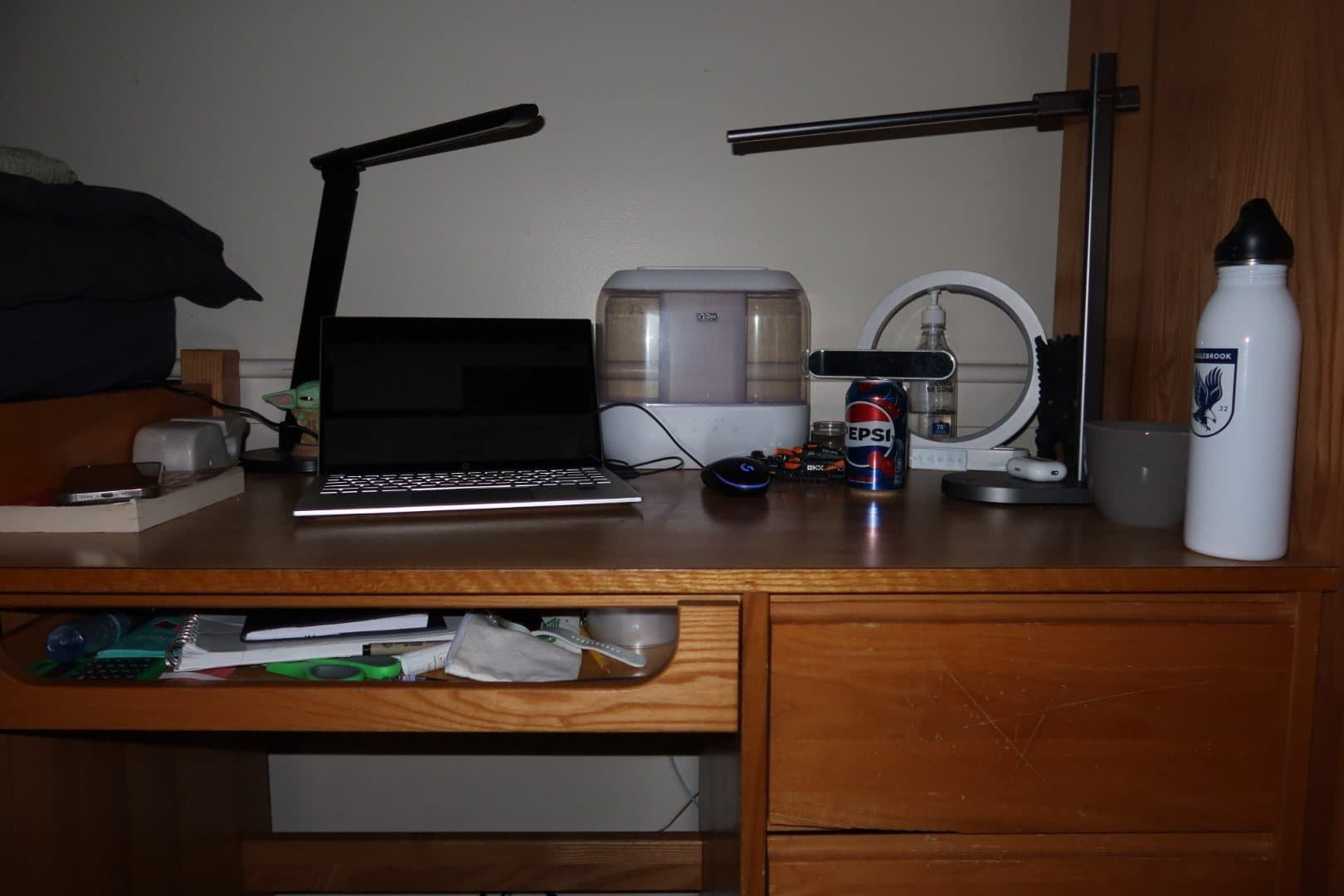
I was at my desk in my dorm at Dublin School, in southern New Hampshire. It was about 1:32 in the morning. I was finishing a YouTube video about quantum computers when a newsletter notification came in. It was about Starcloud’s satellites, and how that work was moving forward.
It was the first time I had heard of AI data centers in space. The idea alone amazed me. Then I read their paper.
02 — The questions
What the paper left open
I was shocked, in a good way. Through the rest of the spring I kept turning the same questions over. Starcloud could not answer them for a regular user. Neither could an AI chatbot.
- For someone like me, how much better is this, really?
- How much water do we save if the machines cool in space, instead of with water on the ground?
- The satellites are far away. How much longer does a normal question take?
03 — The research
Papers, then a sketch
I started reading PhD research from MIT, Harvard, Princeton, and the University of Chicago on AI, data centers, and space communication. I questioned their engineering choices. I kept what I could stand behind, and I wrote down what I still wanted to see.
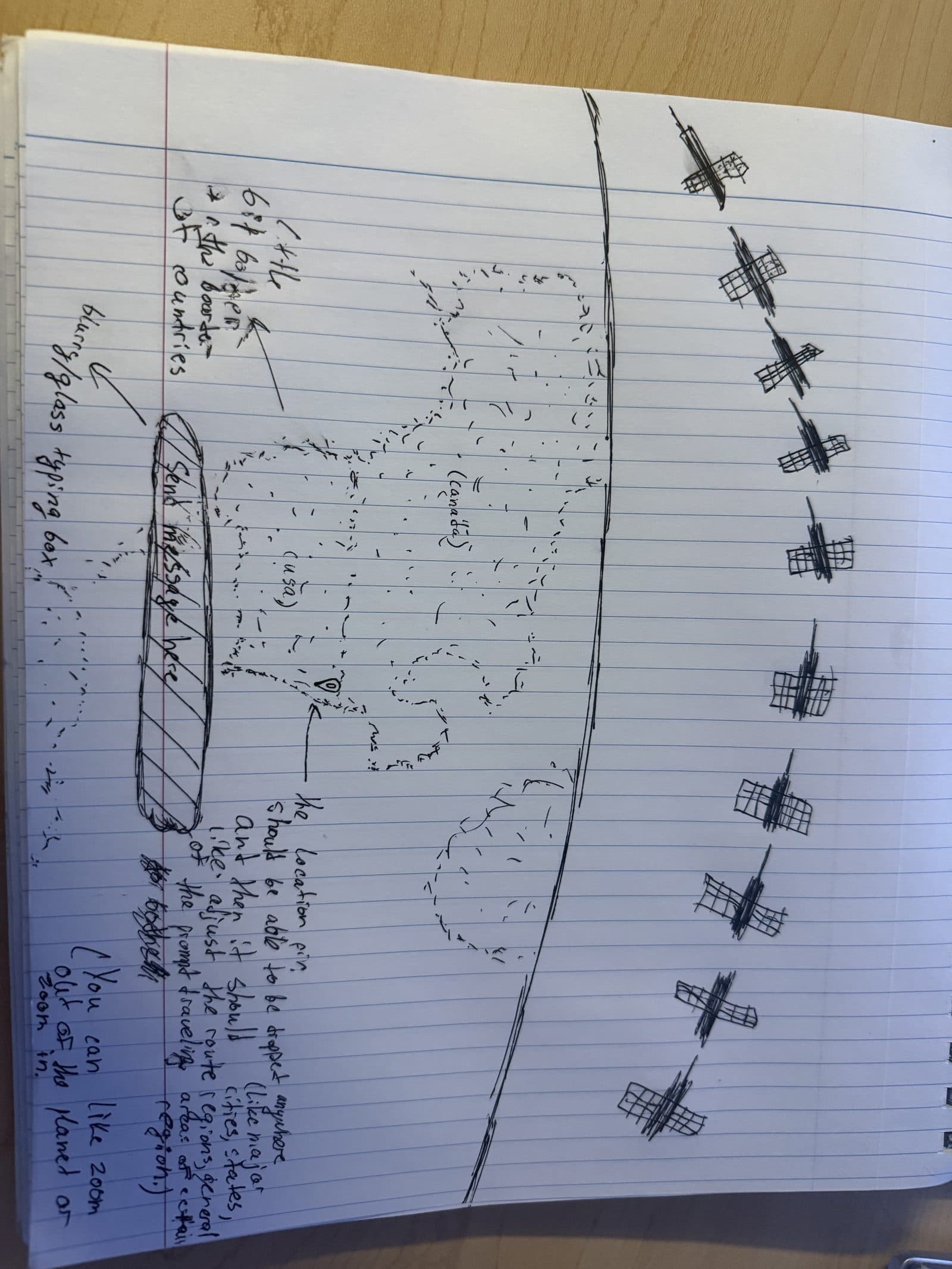
When the notes were enough, I sketched the app the way I saw it. A glass box for the message. A planet you can turn. A pin you can drop anywhere, with the view settling on that region. Satellites along the side. Zoom out to the whole planet, or in until the place fills the screen.
04 — The build
Choices we kept
The sketch became the app on the SpaceVision tab. These are the choices, in plain words. The engineering paper will carry the math.
One question, two paths
You send one prompt. A ground data center answers it, and a modeled orbital data center answers it too. Both show up together, so the difference is on the screen.
The pin is where you are
Drop it anywhere on Earth. The distance starts there. The nearest marker is a public reference site, and the label says it is a model.
You can watch the delay
The camera follows the request out and back, on the ground and through the orbital shell. The extra distance is something you see, then a number you can read.
Water is part of the answer
Ground sites evaporate water to stay cool. The orbital model sheds heat into space and uses no cooling water. That comparison is why the results show a cup.
Real replies, modeled routes
A real model writes both answers. The routes use fiber, radio, and the speed of light, sped up so you can follow them. Measured numbers and assumed numbers are labeled on the page.
A shell you can see
The band of craft draws a sun-synchronous orbit, so the idea of computers in space is on the globe. It stands in for the Starcloud-2 plan, and the label says it is a model.
05 — Later
Engineering paper
A longer paper is in progress. It will go through the technical choices, the sources, and the math. When it is ready, it will be attached here.